Eddy’s Prostate Cancer Story | Robotic Surgery in Thailand
Last updated: 31 Oct 2026
59 Views
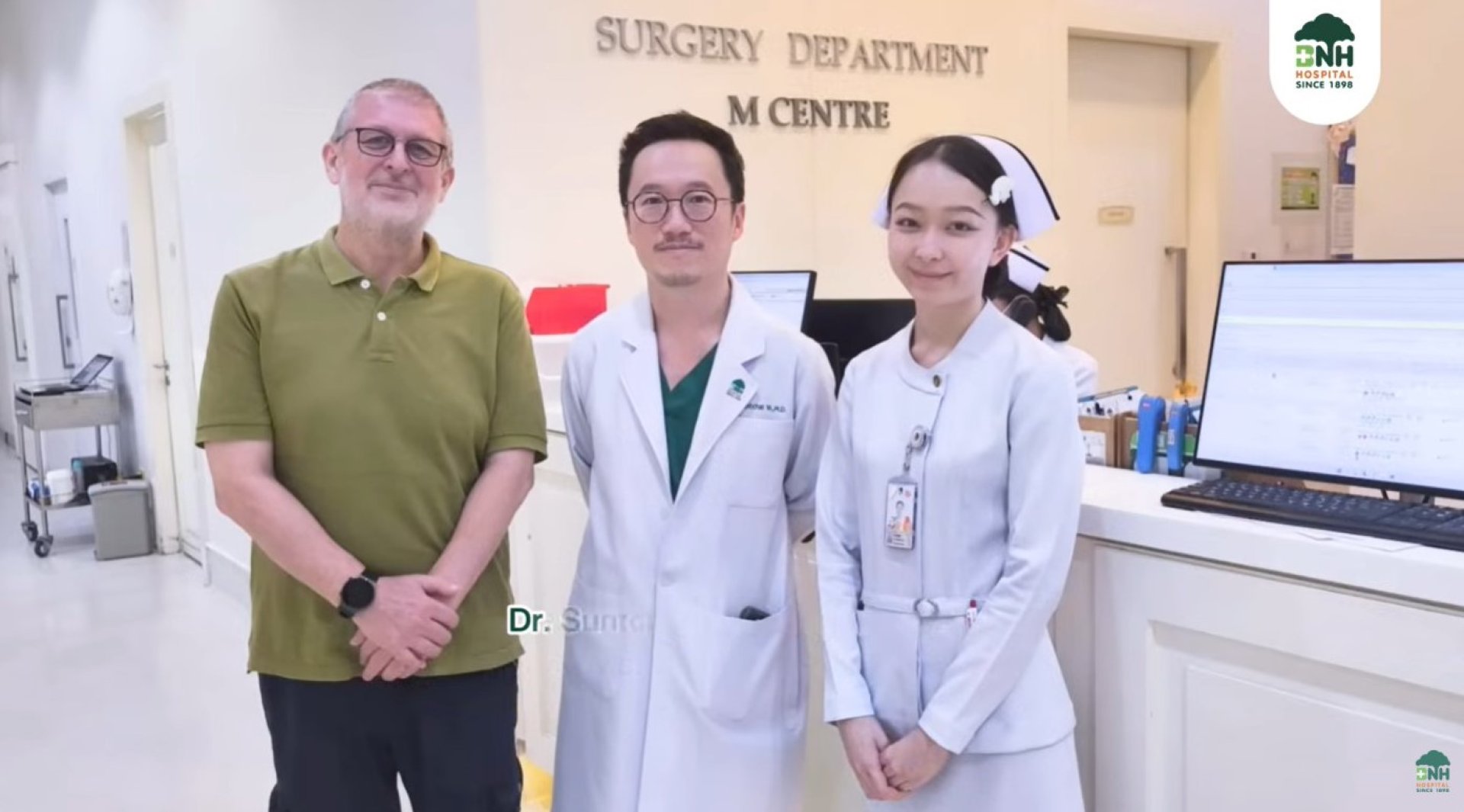
Eddy’s Story: The Journey of Fighting Prostate Cancer in Thailand
For nearly 30 years, Eddy had enjoyed an active life in Thailand. At 64, he considered himself healthy, and cancer was the last thing he expected to face.
But during a long-overdue annual health check-up, a simple blood test called the prostate-specific antigen (PSA) test revealed a concern that changed his life: early-stage prostate cancer.
Eddy’s experience is a reminder that some health conditions may develop without obvious symptoms. His diagnosis allowed him to explore treatment options, and he chose robotic-assisted surgery at BNH Hospital in Bangkok.
Through his journey, Eddy shares an important message about health awareness, early detection, and the value of compassionate medical care.
Watch Eddy’s story: Eddy’s Story – The Journey of Fighting Prostate Cancer
1. Prostate Cancer: A Condition That May Have No Early Symptoms
The prostate is a small gland in the male reproductive system, located below the bladder. Prostate cancer develops when cells in the prostate begin to grow abnormally.
One challenge with prostate cancer is that early-stage disease often causes no noticeable symptoms. Some men may feel completely well, as Eddy did.
When symptoms occur, they may include:
- Difficulty starting or maintaining urination
- Frequent urination, especially at night
- A weak or interrupted urine flow
- Blood in the urine or semen
- Persistent pain in the back, hips, or pelvis
These symptoms can also be caused by non-cancerous prostate conditions. Anyone experiencing concerning symptoms should consult a qualified healthcare professional.
2. How a PSA Blood Test Helped Eddy Discover Prostate Cancer
Eddy’s diagnosis began with an annual health check-up that included a PSA blood test.
PSA stands for prostate-specific antigen, a protein produced by cells in the prostate. A blood test measures the amount of PSA in the bloodstream.
A higher-than-expected PSA level may indicate a prostate problem, but it does not automatically mean that cancer is present. Prostate enlargement, inflammation, and other conditions can also affect PSA levels.
If a PSA result is concerning, a doctor may recommend further assessment. Depending on the individual case, this may include repeat testing, imaging, or a prostate biopsy.
A biopsy is generally needed to confirm a diagnosis of prostate cancer.
Should Men Consider Prostate Cancer Screening?
Eddy’s experience highlights the importance of discussing prostate health with a doctor, even when a person feels well.
However, PSA screening is not automatically appropriate for everyone. It can detect some cancers earlier, but it can also lead to false-positive results, further investigations, and treatment of cancers that might never have caused problems.
The American Cancer Society recommends that men discuss the possible benefits, risks, and uncertainties of screening with their healthcare provider. The timing of that discussion depends on individual risk factors.
The important lesson: Do not wait for symptoms before discussing your prostate health with a qualified medical professional.
3. Eddy’s Decision: Robotic-Assisted Prostate Cancer Surgery in Thailand
After his diagnosis, Eddy chose robotic-assisted surgery at BNH Hospital in Bangkok.
Robotic-assisted surgery is a form of minimally invasive surgery in which a surgeon controls specialised instruments using a robotic system. The system does not operate independently or make medical decisions.
For suitable patients with prostate cancer, robotic-assisted surgery may allow the surgeon to work through small incisions with a magnified, three-dimensional view of the surgical area.
The potential advantages may include:
- Greater instrument flexibility in a confined surgical area
- Smaller incisions compared with traditional open surgery
- Potentially less blood loss in some cases
- A recovery process that may differ from open surgery
However, robotic-assisted surgery is not suitable for every patient and does not guarantee better results. Possible complications can include bleeding, infection, anaesthesia-related risks, urinary problems, and changes in sexual function. The treating team should explain the individual risks and alternatives before surgery.
For more information about prostate cancer care at BNH Hospital, visit the hospital’s Cancer Care page.
4. Why Thailand Is a Destination for Medical Treatment
Thailand welcomes international patients seeking a range of medical services, including specialist consultations, cancer care, surgery, health screening, and rehabilitation.
For patients considering medical treatment in Thailand, important factors may include:
Specialist medical services
Patients can explore hospitals with departments dedicated to urology, oncology, surgery, and other medical specialities.
Modern medical technology
Some Thai hospitals offer robotic-assisted surgical systems and advanced diagnostic equipment. The suitability of a particular technology depends on the patient's diagnosis and treatment needs.
International patient support
Some hospitals provide English-speaking staff, international patient departments, appointment coordination, and assistance with medical records.
Recovery and follow-up planning
Patients should consider not only the procedure itself, but also the time needed for recovery, follow-up appointments, and medical clearance before travelling home.
Choosing a hospital should involve careful research into the treating doctor's experience, hospital facilities, treatment plan, costs, and follow-up arrangements.
5. Eddy’s Story: A Reminder to Take Health Seriously
Eddy’s experience shows how an unexpected diagnosis can change a person's priorities.
After nearly three decades of active living in Thailand, he faced a health challenge he had not anticipated. A checkup identified the problem, and he could discuss treatment with his medical team.
His journey also highlights the importance of asking questions and understanding the available options.
For men concerned about prostate health, useful questions to discuss with a doctor include:
- Should I consider a PSA blood test?
- What factors affect my personal risk?
- What could an abnormal PSA result mean?
- What additional tests might be needed?
- What treatment options are available if cancer is confirmed?
- What are the benefits and possible risks of each option?
A well-informed decision begins with a conversation between the patient and a qualified healthcare professional.
Conclusion: Early Awareness Can Make a Difference
Eddy’s prostate cancer journey is an important reminder that health concerns can arise even when we feel well.
His annual check-up led to an early-stage diagnosis, and he chose robotic-assisted surgery at BNH Hospital in Bangkok. His story highlights the role of medical assessment, informed treatment decisions, and compassionate care.
Although every patient's experience is different, taking an active role in your health can help you understand your options and make decisions with greater confidence.
Explore healthcare in Thailand with ThaiCureo. We help international patients explore medical options and coordinate medical travel enquiries. Contact ThaiCureo to discuss your healthcare needs and learn about the next steps.
Medical disclaimer: This article is based on the patient story provided and is intended for general information only. It does not establish that the same treatment is suitable for another person. PSA screening and prostate cancer treatment decisions should be made with qualified healthcare professionals. Individual results and recovery experiences vary.
Summary
Patient Background & Unexpected Diagnosis: Mr. Eddy Bellavoine, a 64–65-year-old French expatriate living in Thailand for 27 years, considered himself extremely healthy and active with zero symptoms. Following a routine health checkup, an elevated PSA test led to further investigations (MRI and biopsy) that confirmed a prostate cancer diagnosis.
Patient Background & Unexpected Diagnosis: Mr. Eddy Bellavoine, a 64–65-year-old French expatriate living in Thailand for 27 years, considered himself extremely healthy and active with zero symptoms. Following a routine health checkup, an elevated PSA test led to further investigations (MRI and biopsy) that confirmed a prostate cancer diagnosis.
The Emotional Journey: Describing the experience as an emotional "roller coaster," Mr. Bellavoine reflects on the stress of waiting between diagnostic stages, particularly the anxious month-long wait for a clear PET scan.
Treatment at BNH Hospital: Choosing BNH Hospital for its compassionate, human-centric care and personal familiarity, he opted for state-of-the-art robotic-assisted surgery for superior surgical precision. He praises the attentive nursing staff, support teams, and post-discharge follow-up care that made his hospital stay feel remarkably comforting.
Health Awareness & Advice: Emphasising that men over 50–55 should undergo annual checkups with a PSA test regardless of whether they experience symptoms, Mr. Bellavoine uses the analogy of an aeroplane pilot running a pre-flight checklist to stress the importance of regular body maintenance. He concludes with heartfelt gratitude to his surgical and medical care team at BNH
Recommended Internal Links for ThaiCureo
Advanced Cancer Treatment Options Available in Thailand
Thailand’s World-Class Hospitals: What International Patients Should Know
How to Choose a Hospital in Thailand
How Medical Tourism in Thailand Works
ThaiCureo Medical Travel Consultation
Advanced Cancer Treatment Options Available in Thailand
Thailand’s World-Class Hospitals: What International Patients Should Know
How to Choose a Hospital in Thailand
How Medical Tourism in Thailand Works
ThaiCureo Medical Travel Consultation
Suggested Call to Action
Planning Medical Treatment in Thailand?
ThaiCureo can help you explore healthcare, wellness, accommodation, transportation, and personalised support for your journey.
Start Your Thailand Healthcare Journey with ThaiCureo → For more information, FAQ, Let Us Help, or Contact Us
Planning Medical Treatment in Thailand?
ThaiCureo can help you explore healthcare, wellness, accommodation, transportation, and personalised support for your journey.
Start Your Thailand Healthcare Journey with ThaiCureo → For more information, FAQ, Let Us Help, or Contact Us


Tags :
Related Content

Discover how Thailand's hospitals use telemedicine, electronic medical records, AI and digital platforms to improve patient services and healthcare coordination.
 Noottie
16 Nov 2026

Understand medical treatment costs in Thailand, including hospital fees, treatment packages, travel expenses, insurance, and tips for comparing quotations.
 Thomas K.
21 Oct 2026

Discover the top 10 tourist attractions in Thailand for first-time visitors, including Bangkok, Phuket, Chiang Mai, Ayutthaya, Koh Samui, and more.
Noottie
24 Jun 2026
