Endoscopic Spine Surgery in Thailand | Mr. Saverio’s Story
Last updated: 17 Nov 2026
38 Views
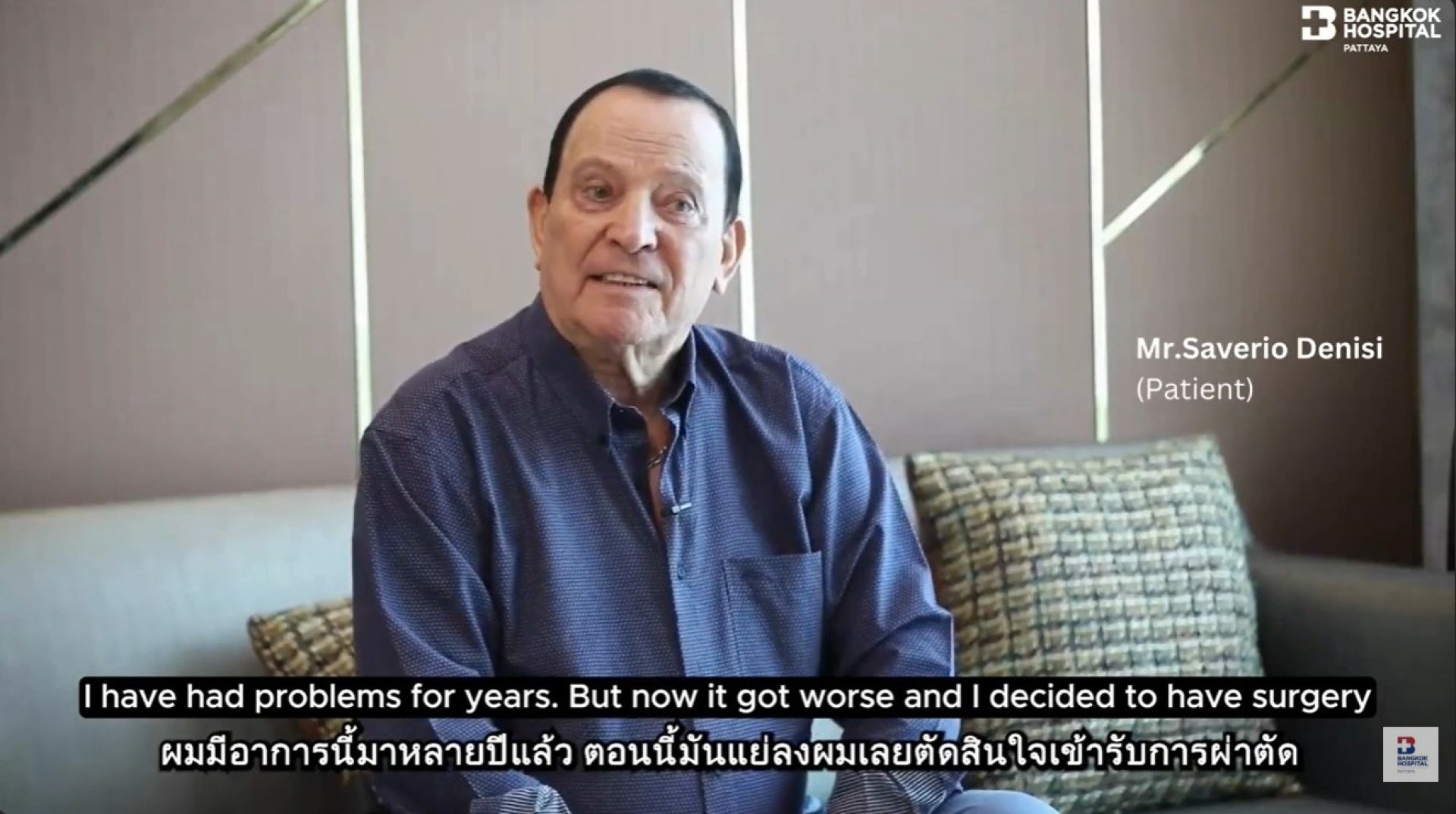
A Patient Story: Mr. Saverio and Endoscopic Spine Surgery
Back and leg pain can gradually affect everyday life. Simple activities such as walking, standing, sleeping, or spending time with family may become difficult when a spinal condition places pressure on nearby nerves.
The video featuring Mr. Saverio introduces endoscopic spine surgery as one treatment approach for selected patients with degenerative spinal disease. It also introduces Dr. Boonserm Pakdeenit, an orthopaedic surgeon specialising in spinal surgery at Bangkok Hospital Pattaya’s Orthopaedic and Joint Surgery Centre.
A patient story can help viewers understand what a treatment journey may involve. However, every person's condition is different. A result shown in a video should not be taken as a promise that another patient will have the same experience.
What Is Degenerative Spinal Disease?
Degenerative spinal disease describes changes in the structures of the spine that can develop over time. These changes may affect the intervertebral discs, joints, ligaments, and the spaces through which spinal nerves pass.
Common conditions include:
Degenerative Disc Disease
Spinal discs act as cushions between the bones of the spine. With age and normal wear, a disc may lose some of its height or flexibility. This can contribute to back or neck pain in some people.
Herniated Disc
A disc may bulge or herniate and press against a nearby nerve. Depending on its location, this can cause pain, tingling, numbness, or weakness in an arm or leg.
Spinal Stenosis
Spinal stenosis is a narrowing of the spinal canal or the openings where nerves leave the spine. When nerves become compressed, a person may experience back or neck discomfort, leg symptoms, or difficulty walking.
Not everyone with age-related changes on an X-ray or MRI has symptoms. Doctors consider the person's medical history, physical examination, symptoms, and imaging results together before recommending treatment.
How Does Endoscopic Spine Surgery Work?
Endoscopic spine surgery is a minimally invasive technique that uses a small camera, called an endoscope, and specialised instruments. The surgeon works through a small incision to view the affected area and perform the planned procedure.
Depending on the diagnosis, the aim may be to remove or reduce the tissue that is pressing on a nerve. This may involve treating a herniated disc or creating more space around compressed nerves.
Compared with some traditional open procedures, endoscopic spine surgery may reduce the amount of muscle and soft-tissue disruption.
For appropriately selected patients, potential advantages can include:
- A smaller surgical incision
- Less disruption to nearby muscles and soft tissues
- Reduced blood loss in some procedures
- A shorter hospital stay in suitable cases
- Earlier movement and rehabilitation for some patients
These are potential benefits, not guaranteed outcomes. The exact procedure, recovery period, and risks depend on the patient's diagnosis, general health, and the surgeon's assessment.
Who May Be Suitable for Endoscopic Spine Surgery?
Endoscopic spine surgery may be considered for certain patients with conditions such as a herniated disc or spinal stenosis, particularly when symptoms are linked to identifiable nerve compression.
A specialist may first recommend non-surgical care, depending on the condition. Options can include medication, supervised physical therapy, activity changes, or selected injection treatments.
Surgery may be discussed when symptoms remain troublesome despite appropriate conservative care, or when clinical findings indicate that an operation should be considered.
Not every spinal condition can be treated with an endoscopic approach. Significant spinal instability, some spinal deformities, complex disease, or other medical factors may require a different operation or treatment plan.
A second opinion can be useful when a patient is uncertain about a proposed procedure.
What Should Patients Expect Before and After Surgery?
Before recommending endoscopic spine surgery, a spine specialist usually reviews the patient's symptoms, medical history, previous treatment, and diagnostic images. MRI or other imaging may help identify the location and cause of nerve compression.
Patients should ask the surgeon to explain:
- The exact diagnosis and the purpose of the proposed operation
- Why an endoscopic approach is being considered
- Other reasonable treatment options
- The expected benefits and important risks
- Whether additional procedures, such as spinal fusion, may be needed
- The likely hospital stay and rehabilitation plan
- Follow-up arrangements after returning home
After surgery, recovery is individual. Some patients may begin walking soon after the procedure, while others need more time and support. Follow-up appointments and any recommended rehabilitation are important parts of care.
Patients should follow the instructions given by their own medical team rather than relying on another person's recovery story.
Spine Surgery at Bangkok Hospital Pattaya
The video identifies Dr. Boonserm Pakdeenit as an orthopaedic surgeon specialising in spinal surgery at Bangkok Hospital Pattaya.
The hospital's Orthopaedic Centre provides information about endoscopic spine surgery and lists Dr. Boonserm as the information provider for its service page.
People considering treatment should contact the hospital directly to confirm the available services, the treating specialist, consultation arrangements, estimated costs, and whether their particular diagnosis may be suitable for an endoscopic procedure.
Considering Spine Treatment in Thailand?
Thailand has hospitals that provide specialist assessment and a range of spinal treatment options. For international patients, planning may involve sharing medical reports and imaging, arranging a specialist consultation, understanding the proposed treatment and costs, and organising accommodation and transport if travel is appropriate.
When comparing hospitals, patients should look beyond the procedure name. Consider:
- The surgeon's experience with the specific diagnosis
- The hospital's facilities
- A clear explanation of risks and alternatives
- Rehabilitation support
- The plan for follow-up after returning home
At ThaiCureo, we help people explore healthcare information in Thailand and understand practical arrangements for contacting hospitals. We are not a hospital or medical provider, and we do not diagnose conditions or recommend surgery. Patients and qualified medical professionals should make treatment decisions after an individual assessment.
Frequently Asked Questions
Is endoscopic spine surgery suitable for every patient with back pain?
No. Back pain has many possible causes, and endoscopic spine surgery is appropriate only for selected spinal conditions. A specialist must assess the symptoms, examination findings, and imaging before discussing surgery.
Does endoscopic spine surgery always mean a faster recovery?
No. A minimally invasive approach may support a shorter recovery for some patients, but recovery varies. The diagnosis, procedure, general health, and rehabilitation plan all matter.
Can degenerative spinal disease be treated without surgery?
Sometimes. Depending on the condition and its severity, treatment may include medication, physical therapy, activity modification, or other non-surgical care. A doctor can explain which options are appropriate.
Where can international patients ask about spine treatment in Pattaya?
Patients can contact Bangkok Hospital Pattaya directly for information about its Orthopaedic Centre and specialist consultations. ThaiCureo can also help explain general healthcare and travel arrangements in Thailand, without replacing medical advice.
A Careful, Informed Approach to Spine Health
Mr. Saverio's story offers an opportunity to learn about endoscopic spine surgery and the role of minimally invasive techniques in modern spinal care.
The most important lesson is that treatment should be based on an accurate diagnosis and an individual discussion of benefits, risks, and alternatives.
If you or a family member is considering spine treatment in Thailand, take time to review the medical information, ask questions, and seek advice from a qualified spine specialist.
Medical Disclaimer: This article is for general educational purposes only. It is not medical advice, diagnosis, or a recommendation for surgery. Procedures and outcomes vary between patients. Please consult a qualified medical professional about your individual condition.
Summary
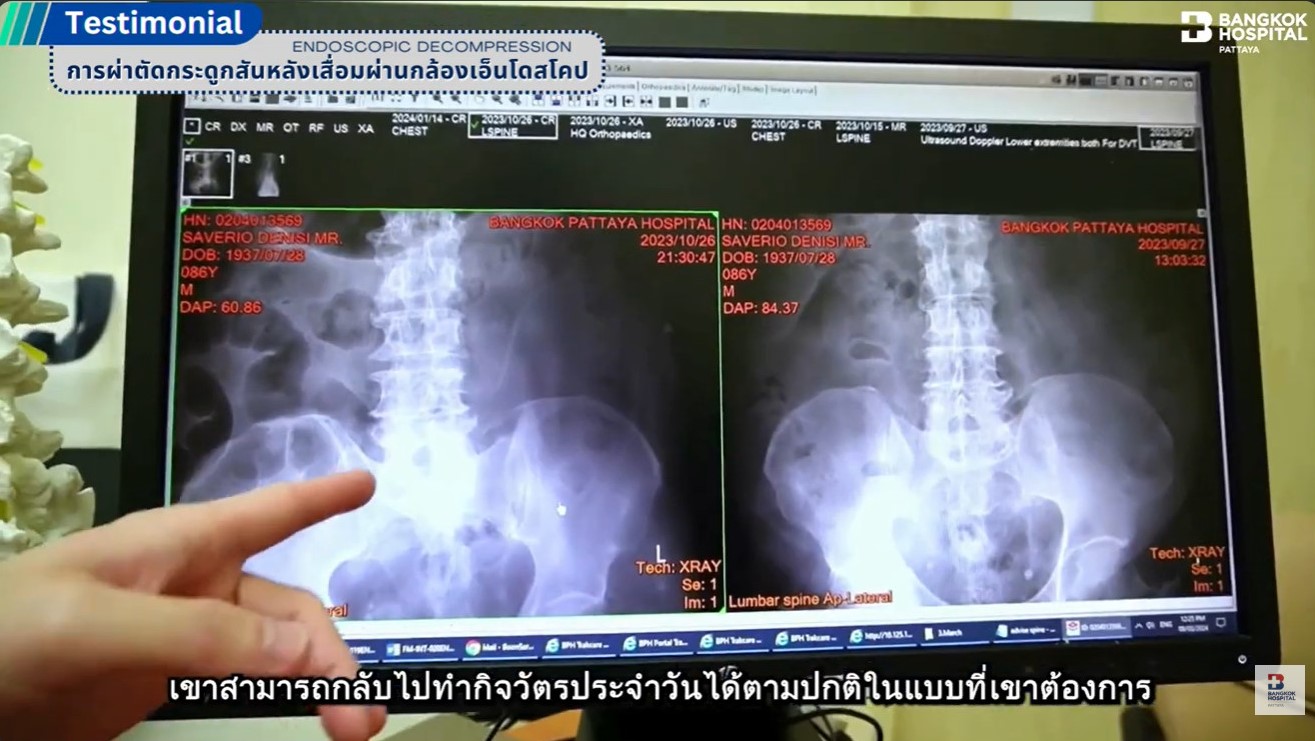
Background & Symptoms: Mr. Saverio Denisi, an 86-year-old patient, suffered from severe chronic lower back and leg pain caused by lumbar disc degeneration and nerve compression at the L4-L5 levels.
Background & Symptoms: Mr. Saverio Denisi, an 86-year-old patient, suffered from severe chronic lower back and leg pain caused by lumbar disc degeneration and nerve compression at the L4-L5 levels.
Medical Consultation & Decision: After initial conservative treatments (anti-inflammatory medications) and diagnostic imaging confirmed collapsing spinal discs, doctors recommended a minimally invasive endoscopic spinal decompression. Trusting his medical team, Mr. Denisi chose to undergo the procedure.
Rapid Recovery & Results: The surgery was a success, allowing him to stand and walk with significantly reduced pain the very next morning and be discharged after a one-night stay.
Long-Term Outcome: Almost two months post-surgery, Mr. Denisi is completely pain-free, has returned to his normal daily activities, and expresses complete satisfaction with the care he received at Bangkok Hospital Pattaya.




Tags :
Related Content

Discover Rachel's breast augmentation journey from Australia to Thailand and learn why international patients choose Thailand for cosmetic surgery and medical tourism.
 Petergems
24 Jun 2026

Discover how a Finnish tourist received emergency treatment for an abdominal aortic aneurysm in Thailand, and learn about AAA symptoms, diagnosis and treatment.
Petergems
13 Nov 2026

Discover what international patients should know about Thailand's world-class hospitals, advanced medical technology, experienced specialists, and medical tourism services.
 Thomas K.
14 Jul 2026
